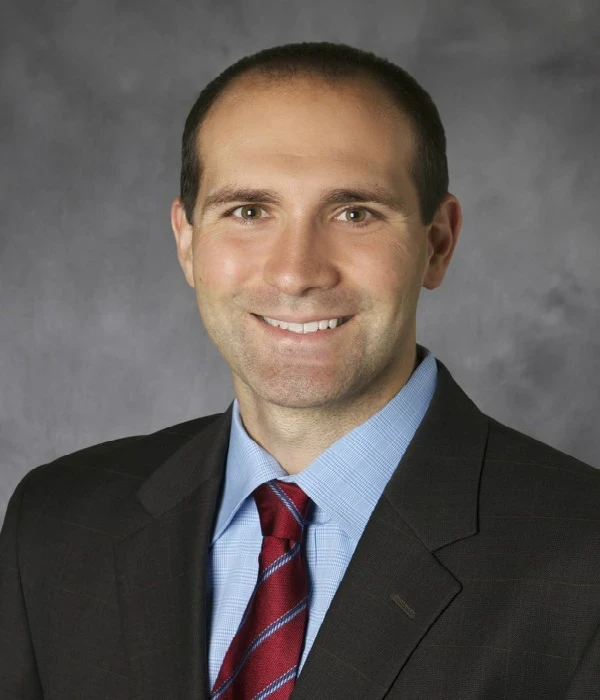
Winston-Salem, North Carolina — OrthoCarolina

Precision Care
for the Shoulder

Fellowship-trained in sports medicine and shoulder reconstruction. Board-certified orthopedic surgery — focused exclusively on getting you back to the life you love.

4.9★
Patient Rating
Fellowship
Trained
560+
Patient Reviews
Dr. S. Bradley Winter, MD
★★★★★
4.9 out of 5
Based on 560+ verified patient reviews

About Dr. Winter

S. Bradley
Winter, MD
Orthopedic Surgery · Sports Medicine · Shoulder Reconstruction

Dr. S. Bradley Winter is a board-certified orthopedic surgeon with fellowship training in sports medicine and shoulder reconstruction through the Steadman Hawkins Clinic of the Carolinas — one of the most respected orthopedic programs in the country.

His practice is focused exclusively on shoulder pathology, from rotator cuff tears and instability to complex shoulder replacement and revision surgery. Dr. Winter sees patients at OrthoCarolina’s Winston-Salem and Clemmons locations, serving the entire Piedmont Triad.

Education
Undergraduate — Vanderbilt University
Bachelor of Arts
Medical Degree — UT Health Science Center, Houston
University of Texas Health Science Center at Houston
Residency & Fellowship
Orthopedic Surgery Residency — Wake Forest Baptist Medical Center
Winston-Salem, North Carolina
Fellowship — Sports Medicine & Shoulder Reconstruction
Steadman Hawkins Clinic of the Carolinas
Board Certification
Board Certified — Orthopedic Surgery
American Board of Orthopaedic Surgery
Professional Memberships
American Shoulder & Elbow Surgeons American Academy of Orthopaedic Surgeons American Orthopaedic Association NC Medical Society
Winston-Salem — 170 Kimel Park Dr
Clemmons — 3311 Jessie Village Dr

Conditions Treated

What We Treat

A focused shoulder practice means deeper expertise. Every condition below falls within Dr. Winter’s subspecialty training.

🔄
Rotator Cuff Tears ↗
Partial and full-thickness tears of the supraspinatus, infraspinatus, subscapularis, or teres minor tendons causing pain, weakness, and limited motion.
Shoulder Instability ↗
Recurrent dislocations, subluxations, and labral pathology including Bankart lesions and Hill-Sachs defects from traumatic or atraumatic causes.
🔗
AC Joint Injuries ↗
Acromioclavicular separations and chronic AC arthritis from falls, direct trauma, or cumulative wear — common in active and athletic patients.
🦴
Shoulder Arthritis ↗
Glenohumeral osteoarthritis, post-traumatic arthritis, avascular necrosis, and inflammatory arthritis causing progressive joint destruction and pain.
❄️
Frozen Shoulder ↗
Adhesive capsulitis causing progressive stiffness and pain across all planes of motion, often following injury, surgery, or prolonged immobilization.
📌
SLAP & Labral Tears ↗
Superior labrum anterior-to-posterior tears frequently seen in overhead athletes and throwing sports, producing deep aching and mechanical symptoms.
💪
Biceps Pathology ↗
Biceps tendon tears, tendinitis, and SLAP-associated biceps lesions — often treated concurrently with rotator cuff or labral procedures.
🏃
Sports Injuries ↗
Acute and overuse shoulder injuries in athletes of all levels — from weekend warriors to competitive and professional athletes seeking return-to-sport care.
🔩
Failed Prior Surgery ↗
Complex revision cases following prior shoulder surgery including failed rotator cuff repairs, instability procedures, and shoulder replacement complications.

Surgical Procedures

How We Treat It

From minimally invasive arthroscopy to complex reconstruction, each approach is tailored to your anatomy, activity level, and goals.

Rotator Cuff Repair
Instability Surgery
Shoulder Replacement
SLAP & Labral Repair
Biceps Tenodesis
Revision Surgery
Rotator Cuff Repair
Arthroscopic rotator cuff repair restores the torn tendon back to its footprint on the greater tuberosity using suture anchors. Most repairs are performed entirely through small portals, minimizing soft tissue disruption and accelerating recovery.
Single-row, double-row, or transosseous-equivalent constructs based on tear size and tissue quality
Concurrent biceps tenodesis or tenotomy when indicated
Subacromial decompression and bursectomy as needed
Sling immobilization typically 4–6 weeks post-operatively
Return to full activity 4–9 months depending on tear complexity
Instability Surgery
Arthroscopic Bankart repair reconstructs the torn anterior labrum and capsulolabral complex using suture anchors. For patients with significant bone loss, a Latarjet or bony Bankart procedure may be required to restore stability.
Arthroscopic Bankart repair for soft tissue instability
Remplissage for engaging Hill-Sachs lesions
Latarjet coracoid transfer for glenoid bone loss greater than 20%
Capsular plication for multidirectional instability
Return to contact sports typically 5–7 months
Shoulder Replacement
Total shoulder arthroplasty replaces the arthritic ball and socket with prosthetic components to restore pain-free motion. Reverse total shoulder arthroplasty changes the joint geometry, enabling the deltoid to compensate when the rotator cuff is irreparable.
Anatomic total shoulder for glenohumeral arthritis with intact rotator cuff
Reverse total shoulder for cuff tear arthropathy or massive irreparable tears
Humeral head resurfacing for younger, active patients
Hemiarthroplasty in selected fracture or avascular necrosis cases
Most patients return to daily activities within 3–4 months
SLAP & Labral Repair
Superior labral tears are repaired arthroscopically by reattaching the labrum to the glenoid rim with suture anchors. In older patients or those with concurrent biceps pathology, biceps tenodesis is often preferred over SLAP repair.
SLAP repair for throwers and high-demand overhead athletes
Biceps tenodesis as the preferred alternative in appropriate patients
Posterior labral repair for posterior instability patterns
Overhead athletes return to sport: typically 6–9 months
Biceps Tenodesis
Biceps tenodesis relocates the long head of the biceps tendon from inside the shoulder joint to the proximal humerus, eliminating the painful intra-articular portion. Commonly performed alongside rotator cuff repair or as a standalone procedure.
Arthroscopic or mini-open technique based on anatomy and surgeon preference
Subpectoral tenodesis for optimal biomechanical positioning
Reliably eliminates bicipital groove pain and anterior shoulder aching
Return to unrestricted activity typically 3–5 months
Revision Surgery
Failed shoulder surgery requires meticulous assessment of the prior repair, remaining tissue quality, and underlying biomechanical factors. Dr. Winter’s fellowship training in complex reconstruction prepares him for cases others may not take on.
Revision rotator cuff repair with graft augmentation when needed
Revision instability surgery with or without bone grafting
Revision and conversion shoulder arthroplasty
Nerve evaluation and management in complex cases

Patient Testimonials

★★★★★

“Dr. Winter is a very gentle and caring physician. He listens to your concern and gives you the professional advice needed to make sound decisions. And if you’re in pain he tries to work you in as soon as possible. His staff is also wonderful and empathetic to your concern.”

— Belinda P. · Verified OrthoCarolina Patient

Patient Resources

Preparing for Your Care

Knowledge is part of recovery. These resources help you understand your diagnosis and what to expect at every step of your journey with Dr. Winter.

01
Your First Visit
What to bring, what to expect during your consultation, and how a diagnosis is reached through exam and imaging.
Learn more →
02
Understanding Your MRI
A plain-language guide to common shoulder MRI findings — what “full-thickness tear,” “labral fraying,” and “bursitis” actually mean.
Learn more →
03
Pre-Surgery Checklist
Step-by-step preparation: medications to pause, home setup, anesthesia considerations, and what to arrange before your shoulder surgery.
Learn more →
04
Recovery & Rehab
Typical recovery timelines for common shoulder procedures — from immediate post-op protection through strengthening and return to sport. Download condition-specific protocols below.
View Protocols ↓

Rehabilitation Protocols

Post-Operative & Rehab Protocols

Download condition-specific rehabilitation protocols to share with your physical therapist. Each protocol reflects Dr. Winter’s preferred approach and may be individualized based on your surgery.

🔄
Rotator Cuff Repair
Post-Surgical
PDF
Shoulder Instability Surgery
Post-Surgical
PDF
🦴
Shoulder Replacement (TSA / RTSA)
Post-Surgical
PDF
📌
SLAP & Labral Repair
Post-Surgical
PDF
💪
Biceps Tenodesis
Post-Surgical
PDF
🔄
Rotator Cuff Tears — Conservative
Non-Operative
PDF
Shoulder Instability — Conservative
Non-Operative
PDF
🦴
Shoulder Arthritis — Conservative & Post-Op
Non-Operative
PDF
❄️
Frozen Shoulder (Adhesive Capsulitis)
Non-Operative
PDF
⚠  These protocols are general guidelines provided for patient and physical therapist reference. Dr. Winter may modify your protocol based on intraoperative findings, tissue quality, and individual factors. Always follow the specific instructions given at your post-operative visit.

Ready to Get Back to Full Strength?

New and current patients can schedule directly through OrthoCarolina’s online portal.

Schedule with Dr. Winter